

 AAPL Solutions Pvt. Ltd.
Gold
Sheikh Hasina Seeks Return on Bangladesh Victory Day
Sheikh Hasina plans to return to Bangladesh on 16 December, but the government insists she can return only through extradition from India.
Sheikh Hasina Plans to Return to Bangladesh on 16 December Amid Political Tensions
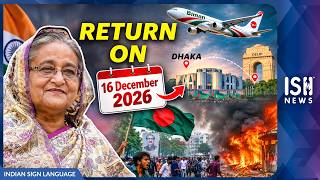
Former Bangladesh Prime Minister Sheikh Hasina has announced plans to return to Bangladesh from India on 16 December 2026. The date is significant because Bangladesh celebrates it as Victory Day, marking its victory over Pakistan in the 1971 Liberation War.
Hasina’s spokesperson, Syed Mozammel Ali, announced the plan on 24 November. He said Hasina wants the Bangladesh government to arrange a flight for her from New Delhi to Dhaka on the national airline, Biman Bangladesh Airlines.
However, the Bangladeshi government has rejected this request. State Minister for Foreign Affairs Humaiun Kobir said Hasina could return only through the extradition process with India. He added that she would be brought back in handcuffs or under strict surveillance. The government’s information adviser, Zahed Ur Rahman, also said that discussions about her return would take place between Bangladesh and India, not directly with Hasina.
India has since clarified that a voluntary return using travel documents is separate from Bangladesh’s extradition request. It said the extradition request is being examined through its established process.
Why Is Sheikh Hasina in India?
Hasina left Bangladesh on 5 August 2024 after a student-led uprising ended her 15-year rule. She has been living in India since then. In November 2025, a Bangladeshi court sentenced her to death in absentia over the crackdown on the student-led protests. Hasina has denied the charges.
Awami League Calls for Protests
Hasina’s political party, the Awami League, has also been facing restrictions. Its political activities have been banned in Bangladesh.
On 13 November, the party announced a week-long protest programme from 14 to 19 November. It made eight demands, including lifting the ban on its activities, releasing arrested party members, withdrawing cases against its leaders and cancelling Hasina’s death sentence.
The protests began with supporters distributing leaflets and writing messages on walls. The party also organised rallies and marches and asked members to send letters to government officials, foreign embassies and international organisations.
Protests Turn Violent
The protests and other political clashes were followed by violence in several parts of Bangladesh, particularly in Gopalganj, Hasina’s home district.
Reports from 14 to 19 November recorded bomb explosions, arson, road blockades and clashes in at least 21 districts. Police also reported incidents across a wider area. Two buses were set on fire at a bus stand in Pirojpur on 18 November. A bus helper who was sleeping inside one of them died in the fire.
Other reported incidents included attacks on police stations, Grameen Bank offices and buildings linked to political figures. The ancestral home of former interim government leader Muhammad Yunus in Chattogram was also set on fire. At least four people were reported killed in the violence from 14 November onwards.
On 19 November, the Awami League called for a nationwide shutdown. Police also arrested people in Dhaka in connection with activities linked to banned organisations. The party later announced another 48-hour nationwide shutdown for 29 and 30 November.
On 24 November, fresh clashes linked to Awami League processions broke out at two locations in Gopalganj. At least 30 people were injured, and several shops were vandalised.
With Hasina’s proposed return date approaching and the extradition issue still unresolved, political tensions in Bangladesh continue.