




 AAPL Solutions Pvt. Ltd.
Gold
Is the Yamuna River Covered in Snow? Or Toxic White Foam on the Yamuna?
White foam has returned to the Yamuna near Kalindi Kunj. Understand what causes it, why defoamers are used and why river pollution remains a concern.
Toxic Foam on the Yamuna as Questions Grow Over Delhi’s Clean-Up
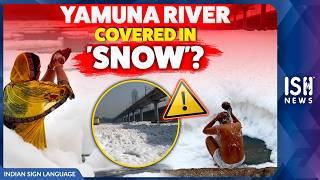
Imagine a river that looks as if it is covered in snow. But the thick white layer floating on the Yamuna is not snow. It is foam linked to water pollution. Thick white foam was seen again on the Yamuna near Kalindi Kunj in Delhi on 30 October 2026. The sight raised fresh concerns about the river's pollution, especially ahead of Chhath Puja.
But why does this foam keep appearing? And what is being done to stop it?
Why Does White Foam Form on the Yamuna?
One major reason is the wastewater entering the river from homes, factories and other sources. This wastewater can contain detergents, soap-like substances called surfactants, industrial pollutants and untreated sewage.
When these substances mix with water, they help trap air bubbles and create foam. The problem becomes worse near the Okhla Barrage, where falling water creates strong turbulence and increases foam formation. Lower winter temperatures also make the bubbles more stable, allowing the foam to remain on the river's surface for longer.
The foam is a visible sign of pollution, but it is not the only concern. People coming into contact with polluted river water may also be exposed to harmful contaminants.
What Is Being Done to Reduce the Foam?
The Delhi Jal Board (DJB) has been using special chemicals called defoamers near Kalindi Kunj since 2022, particularly before Chhath Puja. These chemicals break down the foam and reduce the white layer visible on the river's surface.
During the winter of 2025, around 48,000 kilograms of defoaming chemicals were used over 63 days, according to information provided by the DJB. However, defoamers only reduce the visible foam. They do not remove the sewage, industrial waste or other pollutants entering the river.
An Activist's Efforts to Track Industrial Pollution
Environmental activist Varun Gulati has been working to expose industrial pollution in Delhi since 2018. He uses Google Maps, satellite images and drone footage to identify factories suspected of releasing untreated industrial waste into drains connected to the Yamuna. He also visits industrial areas and files complaints with government authorities.
In a 2025 report by The New Indian Express, Gulati said his efforts had helped get around 700 polluting units sealed over the years.
Manoj Tiwari's Yamuna Dip Triggers Political Debate
On 29 October 2026, BJP MP Manoj Tiwari took a dip in the Yamuna at Sonia Vihar in Delhi. He also performed aachman, a ritual in which a person sips water. Tiwari claimed that pollution in the river had reduced by half over the previous year because of the cleaning work carried out by the BJP government led by Delhi Chief Minister Rekha Gupta. He also said that people could once again celebrate Chhath Puja in the Yamuna. His remarks triggered a political exchange between the BJP and the Aam Aadmi Party (AAP).
A day after Tiwari's visit, thick white foam was seen again near Kalindi Kunj, bringing the Yamuna's pollution problem back into focus. The recurring foam highlights the gap between reducing visible pollution and cleaning the river itself. Unless untreated sewage and industrial waste entering the Yamuna are controlled, the problem is likely to continue.