



 AAPL Solutions Pvt. Ltd.
Gold
Trump Considers Military Action Against Cuba!
Donald Trump says he would consider military action against Cuba. Understand the growing tensions, Cuba's economic crisis and the history of US-Cuba relations.
Trump Considers Military Action Against Cuba! Why Are the US and Cuba Enemies?
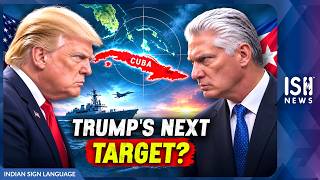
The conflict involving Iran is still ongoing. Meanwhile, US President Donald Trump has said he would consider military action against another country: Cuba. Cuba is located around 150 kilometres from the US state of Florida.
During an interview with radio host Hugh Hewitt on November 12, 2026, Trump was asked whether he would use military force to remove Cuba's communist government.
Trump replied, “I want to get Cuba done before I leave you.” He called Cuba a “failed” country and said he would certainly consider military action. He also said he wanted to help Cubans who had left their country because of difficult conditions.
Trump has made similar comments before. He has repeatedly mentioned US Secretary of State Marco Rubio, who plays an important role in the administration's Cuba policy. Rubio's parents were Cuban immigrants, and he has long supported stronger US action against the Cuban government.
Why Is Cuba Facing a Crisis?
Cuba is experiencing one of its worst economic crises in decades. People are facing long power cuts, fuel and food shortages, and shortages of medicines. The country's tourism industry has also suffered.
Cuba depends heavily on imported oil to generate electricity and operate transport and industries. Its fuel shortage became worse in January 2026 after Venezuelan oil supplies stopped following a US operation that captured Venezuelan President Nicolás Maduro.
Mexico, another important oil supplier, also paused shipments amid concerns about possible US retaliation. Years of economic problems, poor infrastructure, government policies and US sanctions have added to the crisis. As living conditions have worsened, many Cubans have left the country.
How Is the US Pressuring Cuba?
The US is using economic and diplomatic pressure against Cuba, including restrictions on trade and oil supplies. Sanctions are financial or trade restrictions that make it harder for a country, its government or specific organisations to do business internationally.
Here is How:
Oil: Cuba needs imported oil for electricity, transport and factories. The US has put pressure on countries supplying oil to the island. In January 2026, Trump signed an executive order allowing additional tariffs on goods from countries that directly or indirectly provide oil to Cuba.
Businesses: US sanctions restrict certain companies and individuals from doing business with organisations linked to the Cuban government.
Money and banking: Financial transactions involving sanctioned Cuban organisations can be blocked or restricted. This makes it harder for them to receive or transfer money internationally.
Important industries: In November 2026, the US expanded sanctions to cover foreign individuals and organisations operating in Cuba's electronics, manufacturing, marine and technology sectors.
These measures are part of Washington's wider pressure campaign against the Cuban government.
Are the Two Countries Talking?
Despite the tensions, US and Cuban officials have maintained some communication.
In October 2026, Cuba's top diplomat in Washington told Reuters that officials from both countries were communicating through meetings, phone calls and WhatsApp messages. However, she said there were no formal negotiations. Cuba has said it is willing to discuss issues with the US but will not give up its political system or accept demands to remove its leaders.
Why Have the US and Cuba Been Enemies?
The conflict between the US and Cuba goes back to the Cuban Revolution in 1959. That year, Fidel Castro led a revolution that brought an end to the government of Cuban leader Fulgencio Batista. Castro established a communist government and developed close relations with the Soviet Union, which was the main rival of the US during the Cold War.
The US became concerned about Cuba's growing relationship with the Soviet Union, especially because the island is located so close to American territory. In October 1960, the US began imposing a trade embargo on Cuba. These restrictions were expanded in February 1962.
The Cuban Missile Crisis
In 1962, tensions between the US and Cuba reached a dangerous point. The Soviet Union secretly placed nuclear missiles in Cuba. These missiles could reach parts of the US. When Washington discovered them, it demanded that the Soviet Union remove the missiles.
For 13 days, the US and Soviet Union faced off, and the world feared that a nuclear war could begin. The crisis ended after the Soviet Union agreed to remove its missiles from Cuba. In return, the US secretly agreed to remove its Jupiter missiles from Turkey and publicly promised not to invade Cuba.
Did Relations Ever Improve?
Yes. Relations briefly improved under US President Barack Obama.
In 2015, the US and Cuba restored diplomatic relations and reopened their embassies after decades of hostility. However, Donald Trump later brought back several restrictions. The Joe Biden administration eased some of them, but Trump reversed several changes after returning to office in 2025.
For now, Trump has not announced a military operation against Cuba. It remains unclear whether the US will take military action or continue increasing economic and diplomatic pressure. The situation is developing, and Cuba's future relationship with the US remains uncertain.