




 AAPL Solutions Pvt. Ltd.
Gold
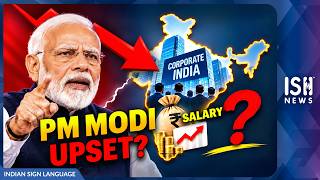
PM Modi Questions Indian Companies Over Salaries and Job Creation
Prime Minister Narendra Modi has questioned Indian companies over the lack of salary increases and job creation despite tax relief.
PM Modi Questions Indian Companies Over Salaries and Job Creation
Prime Minister Narendra Modi has questioned Indian companies over their contribution to job creation and employee salaries, saying that tax benefits given by the government have not led to enough improvements for workers.
He made these remarks on 19 November 2026 while addressing the Annual General Meeting and Annual Convention of the Federation of Indian Chambers of Commerce and Industry (FICCI) in New Delhi. FICCI is an organisation representing businesses and industries in India.
What did PM Modi say?
Modi pointed to the reduction in the basic corporate tax rate from 30% to 22%. He also referred to the income tax relief introduced for individuals earning up to Rs.12 lakh under the new tax regime. He questioned whether companies had increased employee salaries or hired more people after these measures. He said that businesses should not expect the government to take every step while they wait to see the results. He urged companies to share the benefits of economic growth with their employees.
Modi also asked businesses to look beyond India's domestic market and expand into other countries. He said India's trade agreements with several countries could help companies enter new markets, grow their businesses and create jobs. He also questioned why Indian consumers were sometimes offered products labelled as "export quality", saying that people in India also deserve high-quality products.
What do the employment and salary figures show?
The Economic Survey 2024-25 reported that corporate profits among Nifty 500 companies increased by 22.3% in the financial year 2023-24, while employment grew by only 1.5%. Data from the Annual Survey of Industries also shows a gap between the average earnings of factory workers and supervisors or managers.
In 2008-09, a factory worker earned an average of around Rs68,000 per year, while a supervisor or manager earned approximately Rs.4 lakh. Senior staff earned about 5.87 times more.
In 2024-25, the average annual wage of a factory worker increased to Rs.2.28 lakh, while supervisors and managers earned around Rs.14.5 lakh. The difference increased to 6.36 times. These figures show that the gap between the earnings of workers and senior staff has widened over this period.
Rahul Gandhi responds to Modi
On 20 November, Congress leader and Leader of Opposition in the Lok Sabha Rahul Gandhi responded to Modi's remarks in a post on X. He called the Prime Minister's comments a "confession" and questioned the government's policies towards large businesses.
Rahul alleged that airports, ports, mines, forests, electricity, coal and roads had been handed over to a few business groups. He also questioned how many jobs these companies had created. He further said that monopolies reduce competition, increase prices and affect job creation. He also criticised the government's handling of small businesses and traders.
What challenges are businesses facing?
While Modi urged companies to create more jobs, many small and medium-sized businesses also face financial and administrative challenges.
The Economic Survey 2025-26 estimated that around Rs.8.1 lakh crore was locked in delayed payments to Micro, Small and Medium Enterprises (MSMEs). Delayed payments can affect their working capital and make it difficult to pay employees, suppliers and other expenses.
There are also concerns about delays in resolving tax disputes. According to data reported in August 2026, around 75,155 cases had been filed with the Goods and Services Tax Appellate Tribunal (GSTAT), but only 83 had been disposed of at that time.
What about rising inflation?
Inflation is another concern for households and businesses.
Government data for October 2026 showed that wholesale inflation stood at 12.29%, while retail inflation was 6.09%. Wholesale inflation measures price changes at the business level, while retail inflation tracks price changes faced by consumers.
Rising prices can increase business costs and put pressure on household budgets.
What happens next?
Modi's remarks have brought attention to the role of private companies in creating jobs, improving salaries and supporting India's economic growth.
Companies are expected to contribute through investment, employment and better products. At the same time, timely payments, simpler regulations and faster resolution of business disputes remain important for small and medium-sized businesses.
The discussion raises a larger question: How can India ensure that economic growth benefits not only businesses but also the people working for them?