




 AAPL Solutions Pvt. Ltd.
Gold
Indian Navy Rescues 20 Crew Members From Somali Pirates in 48 Hours
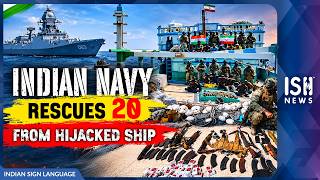
The Indian Navy rescued 20 crew members from the hijacked Iranian fishing vessel Azini off Somalia after an operation involving INS Kolkata and MARCOS commandos.
Indian Navy Rescues 20 Crew Members From Hijacked Iranian Vessel
The Indian Navy has rescued 20 crew members from an Iranian fishing vessel hijacked by Somali pirates off the coast of Somalia. The vessel, named Azini, was hijacked on 29 October 2026 while sailing between the coastal towns of Bandar Bayla and Hafun in northeastern Somalia.
The incident raised concerns that the pirates could use the fishing boat as a “mother ship” to launch attacks on commercial vessels. A mother ship is a larger vessel that pirates use as a base. They can launch smaller speedboats from it to attack ships carrying goods, fuel and other supplies.
The Maritime Security Centre – Indian Ocean warned ships in the area to remain alert and report suspicious activity. The vessel was moving towards a busy commercial shipping route.
How Did the Indian Navy Rescue the Crew?
After receiving information about the hijacking, the Indian Navy launched an operation to locate and free the vessel. The Navy deployed the warship INS Kolkata, supported by a P-8I maritime reconnaissance aircraft and a Sea Guardian drone. These aircraft and surveillance systems helped locate the vessel and track its movements. The Navy also used measures that restricted the boat's movement and prevented it from escaping.
Marine Commandos, known as MARCOS, were then deployed with support from an Indian Air Force C-17 transport aircraft. The commandos boarded and secured the vessel, overcoming the pirate threat. The operation was completed on 2 November after more than 48 hours.
The Ministry of Defence confirmed that all 20 crew members were rescued safely, with no casualties or injuries among them. Photographs shared by Defence Minister Rajnath Singh showed INS Kolkata near the fishing vessel. Other images showed commandos on board, along with suspected pirates and weapons.
The rescue took place more than 3,000 kilometres from Mumbai, demonstrating the Indian Navy's ability to carry out maritime security operations far from India's coastline.
Why Is Somali Piracy a Concern?
The Arabian Sea and the Gulf of Aden are important routes for international trade. Ships carrying goods, fuel and other supplies travel through these waters. Pirate attacks can threaten the lives of sailors and disrupt commercial shipping. Somali piracy has threatened international shipping for many years. International naval patrols and improved ship security reduced attacks over time, but piracy has increased again in 2026.
According to the Associated Press, pirates had hijacked six commercial vessels since April 2026. In September, pirates killed five crew members aboard an oil-products tanker called MT Honour 25 before security forces recovered the vessel. Authorities also detained 16 suspected pirates. The hijacking of Azini added to these concerns about maritime security in the region.
India's Anti-Piracy Patrols
The Indian Navy has maintained anti-piracy patrols in the Gulf of Aden since October 2008. These patrols help protect merchant ships, discourage pirate attacks and support the safety of sailors travelling through important shipping routes.
After the rescue, Defence Minister Rajnath Singh congratulated the Indian Navy and praised the Indian Air Force for supporting the operation. He said India's armed forces remained committed to protecting lives and maintaining security across the Indian Ocean Region.
The successful rescue of the Azini crew highlights the importance of cooperation between India's armed forces in responding to maritime threats and protecting international shipping routes.