

 AAPL Solutions Pvt. Ltd.
Gold
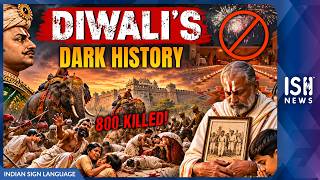
The Diwali Massacre: A Tragedy Remembered for Over 230 Years
For some Mandyam Iyengar families in Karnataka, Diwali is a day of mourning, rooted in the memory of an alleged massacre during Tipu Sultan's rule.
Why Some Mandyam Iyengar Families in Karnataka Do Not Celebrate Diwali
Every year, India celebrates Diwali with lights, sweets and fireworks. However, some families belonging to the Mandyam Iyengar community in Karnataka observe the festival differently. For them, Naraka Chaturdashi, the day before Diwali, is a time to remember their ancestors who are believed to have been killed more than 200 years ago during the rule of Tipu Sultan.
The story is linked to an alleged massacre in the late 18th century. While the community has preserved this account through generations, the exact date, number of people killed and some details of the incident remain disputed.
Who Are the Mandyam Iyengars?
The Mandyam Iyengars are a Tamil-speaking Vaishnavite community with historical roots in parts of present-day Karnataka. Many families were associated with Melukote, a historic temple town in Mandya district known for its temples dedicated to Lord Vishnu.
The Story Behind the Alleged Massacre
The account goes back to the period when Tipu Sultan ruled the Kingdom of Mysore.
According to the community's historical account, some Mandyam Iyengar leaders, including Tirumala Iyengar and Narayana Iyengar, were involved in efforts to restore the Wadiyar family's rule. They were reportedly connected to Maharani Lakshmi Ammani Devi, who was working with the British and others opposed to Tipu Sultan. Tipu Sultan is said to have discovered these activities and suspected members of the community of supporting a plan against his rule.
According to this account, hundreds of Mandyam Iyengar families were arrested and taken to Srirangapatna, which was then the capital of the Kingdom of Mysore.
What Happened on Naraka Chaturdashi?
The community's account says that as Naraka Chaturdashi approached, the prisoners were allowed to leave confinement and gather near a shrine in Srirangapatna. They were reportedly given food and believed they had been allowed to observe the festival. However, the gathering allegedly turned into a massacre when soldiers surrounded the families. Men, women and children were killed.
Some accounts also describe people being crushed by elephants. The killings are believed by the community to have taken place on Naraka Chaturdashi, the day before Diwali.
Where Did the Incident Take Place?
The incident is often associated with Melukote because many members of the Mandyam Iyengar community lived in that region. However, community accounts and reports identify Srirangapatna as the location of the alleged killings. Some versions of the story say that survivors later moved to Melukote and nearby areas.
What Do We Know About the Historical Evidence?
The exact year of the alleged massacre is disputed. Different accounts place it around 1783 or 1790, while some later retellings give a broader period.The number of people killed is also uncertain. Some accounts refer to around 700 families, while others mention figures of 800 or more people.
A 2016 report by The New Indian Express described the community's account and cited a researcher who referred to historical family records and letters associated with Maharani Lakshmi Ammani Devi.However, the alleged massacre and its details are not consistently documented in historical accounts. Some writers and researchers have questioned whether there is enough independent evidence to establish the incident as described.
The distinction is important: the community's remembrance and its tradition of mourning are documented, but the precise historical details remain contested.
Why Do Some Families Still Observe Diwali Differently?
Over generations, the story has remained part of the community's collective memory.
Some Mandyam Iyengar families, particularly those associated with the Bharadwaja gotra, observe Naraka Chaturdashi as a day of mourning. They avoid the usual Diwali celebrations, including lighting lamps and bursting firecrackers, to remember their ancestors. Instead, they observe the day quietly and remember the family members they believe were lost in the massacre.
More than two centuries later, this tradition continues in some families, making Diwali a time of remembrance rather than celebration for them.