




 AAPL Solutions Pvt. Ltd.
Gold
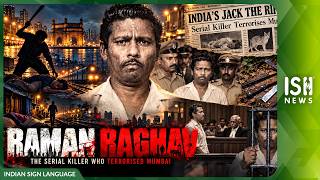
Raman Raghav: The Serial Killer Who Terrorised Mumbai’s Streets
Discover the story of Raman Raghav, the serial killer who terrorised Mumbai in the 1960s, and how police finally tracked him down.
The Raman Raghav Story: How Mumbai’s Most Feared Killer Was Caught
In the 1960s, Mumbai witnessed a series of brutal murders that spread fear across the city. The victims were mostly poor people who slept on pavements, in slums and in small huts. The man behind these attacks was Raman Raghav, one of India's most feared serial killers. His attacks shocked Mumbai, and the police launched a massive operation to catch him.
The First Wave Of Attacks
A series of attacks took place in Mumbai's eastern suburbs between 1965 and 1966.
People sleeping on pavements and inside small shelters were attacked at night with a hard, blunt object. At least 19 attacks were reported, and nine people died. Police suspected Raman Raghav because he was seen moving around areas where some of the attacks had taken place. He already had a criminal record and had spent time in prison for robbery. However, the police could not find enough evidence to connect him to the attacks. He was eventually released.
In 1966, he was also externed from Mumbai for two years, meaning he was ordered to stay away from the city.
Mumbai Lives In Fear As The Murders Return
In 1968, another series of murders began in Mumbai's northern suburbs.
Once again, people sleeping on pavements and in makeshift homes were attacked at night. The attacks created panic across the city. Rumours spread that the killer had supernatural powers and could change his form into animals such as cats and parrots. Some newspapers compared him to Jack the Ripper.
People became afraid to step outside after sunset. Some carried sticks for protection, while frightened residents even attacked innocent people because they suspected them of being the killer. The investigation was led by Deputy Commissioner of Police Ramakant Kulkarni. A special police operation was launched to find the man responsible.
How Police Caught Raman Raghav
On August 27, 1968, Sub-Inspector Alex Fialho spotted a suspicious man in Bhendi Bazaar.
Fialho had studied the case and carried a photograph of the suspected killer. He recognised the man as Raman Raghav and approached him. One detail caught his attention: Raghav was carrying a wet umbrella even though it had not rained in that part of the city. There had been rain in Malad, where the police were investigating the murders.
Raghav was detained and identified through police records and fingerprints. His clothes reportedly had bloodstains, and his shoes were covered in mud. He was arrested in connection with the murders of two brothers, Lal Chand Jagannath Yadav and Dullar Jaggi Yadav, in Malad.
The Chicken Meal That Helped Police Get A Confession
Initially, Raghav refused to answer questions.
According to accounts of the investigation, a police officer casually asked him if he wanted anything to eat. Raghav asked for chicken. He reportedly ate two plates of chicken before asking for coconut oil to massage his head.
After applying the oil, he told the officers that he was ready to speak about the murders. He also agreed to show the police the weapons he had used. Raghav then led investigators to a location where weapons, including an iron crowbar, had been hidden.
During questioning, he reportedly confessed to killing several people. Some accounts put the number at 41 or more, although the exact number of victims remains uncertain. He also spoke about receiving commands from an invisible force that he referred to as "Kanoon", or law.
The Trial And Death Sentence
Raman Raghav was tried for the murders of the two brothers in Malad.
On August 13, 1969, the Sessions Court found him guilty and sentenced him to death. During the legal proceedings, questions were raised about his mental condition.
Some doctors initially considered him fit, while psychiatrist Dr Anand Patkar diagnosed him with chronic paranoid schizophrenia. Raghav reportedly believed that he was following commands from a higher law and that he had to obey them.
The Bombay High Court ordered further medical examinations. A medical board of psychiatrists examined him and concluded that he suffered from serious mental illness. The case also reached the Supreme Court, which examined the legal procedures relating to his mental condition during the death sentence confirmation process.
His Death Sentence Was Changed
On August 4, 1987, the Bombay High Court reduced Raghav's death sentence to life imprisonment. The court considered his long period in prison and his history of schizophrenia and medical treatment. He was later kept at Yerwada Central Jail in Pune.
On April 7, 1995, Raman Raghav died at Sassoon General Hospital in Pune due to kidney failure. His crimes remain among the most disturbing chapters in Mumbai's criminal history. The case also raised difficult questions about mental illness, criminal responsibility and the justice system.